
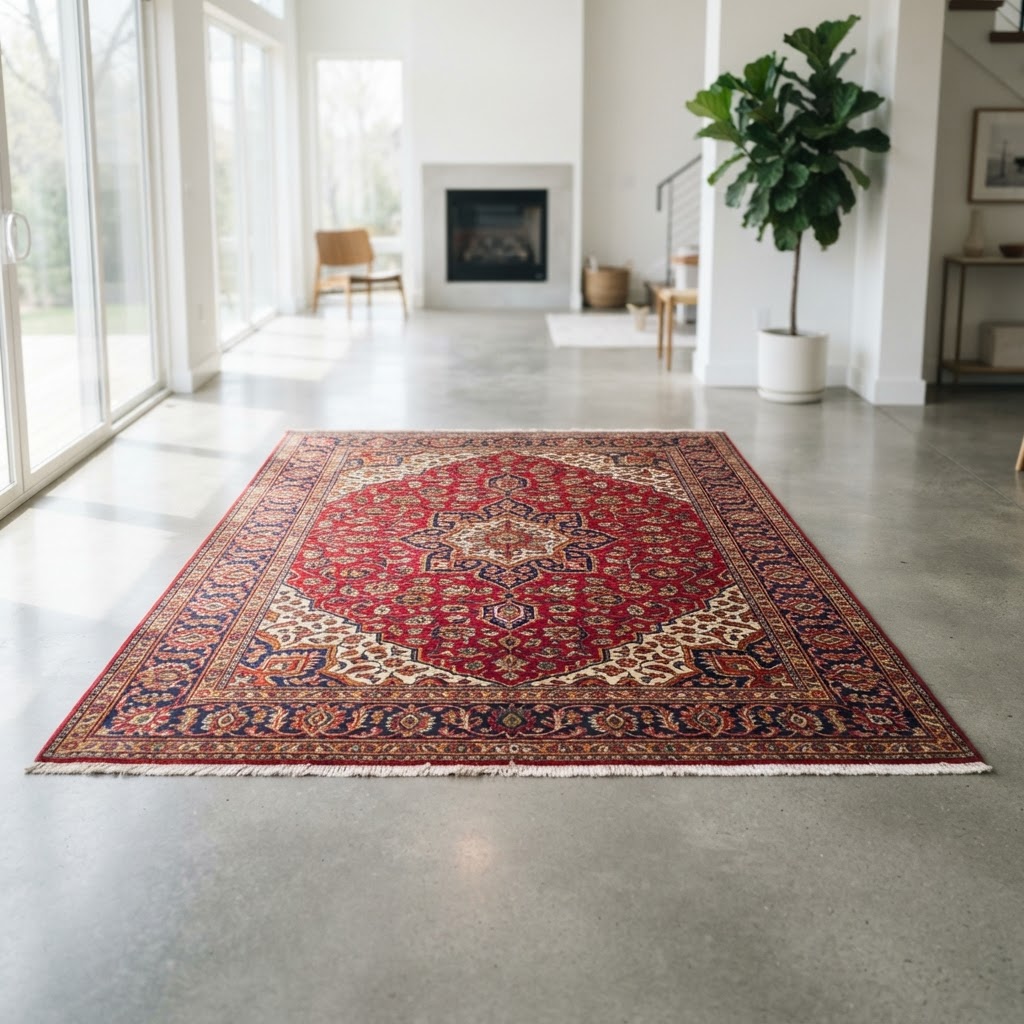
Rug Care & Maintenance Guide
Rugs — especially handmade, oriental and wool pieces — need gentler, more deliberate care than wall-to-wall carpet. With the right routine you protect both the fibres and the dyes, and avoid the irreversible damage caused by incorrect cleaning.
Routine Care
Vacuum gently
Vacuum weekly using suction only (disable the brush) on delicate and handmade rugs to avoid pulling fibres.
Rotate every 6 months
Rotate rugs to even out sun fading and wear from foot traffic.
Shake out smaller rugs
Take smaller rugs outside and beat or shake to remove embedded dry soil.
Use a quality underlay
A proper rug pad prevents slipping, cushions the fibre and adds years to the rug.
Spot Cleaning Rugs
Blot immediately
Lift spills with a clean white cloth — never rub, which distorts the weave and spreads the stain.
Test for colourfastness
Always test any solution on a hidden corner first. Many oriental dyes are not colourfast.
Avoid DIY chemicals
Bleach, vinegar and household spot removers can strip natural dyes and damage wool.
Pet urine
Blot thoroughly and call a professional — urine reaches the foundation and causes permanent odour and dye bleed if left.
Onsite vs Wash-Plant Cleaning
| Factor | Onsite Cleaning | Wash-Plant Cleaning |
|---|---|---|
| Best For | Routine maintenance, synthetic rugs | Handmade, oriental, heavily soiled wool |
| Dust Removal | Surface level | Full dusting in dedicated machinery |
| Drying | In place, 1–4 hrs | Flat, controlled drying prevents shrinkage |
| Risk of dye bleed | Higher if rushed | Low — controlled water & pH |
How Often to Professionally Clean
Most rugs benefit from a professional clean every 12–24 months. High-traffic or pet households should aim for 12 months. Valuable or antique pieces should only be cleaned by a specialist — never a standard carpet cleaner.
Storage Tips
Store rugs rolled (never folded) with the pile facing inward, wrapped in breathable material, in a dry, rodent-free space. Avoid plastic, which traps moisture and causes mildew.